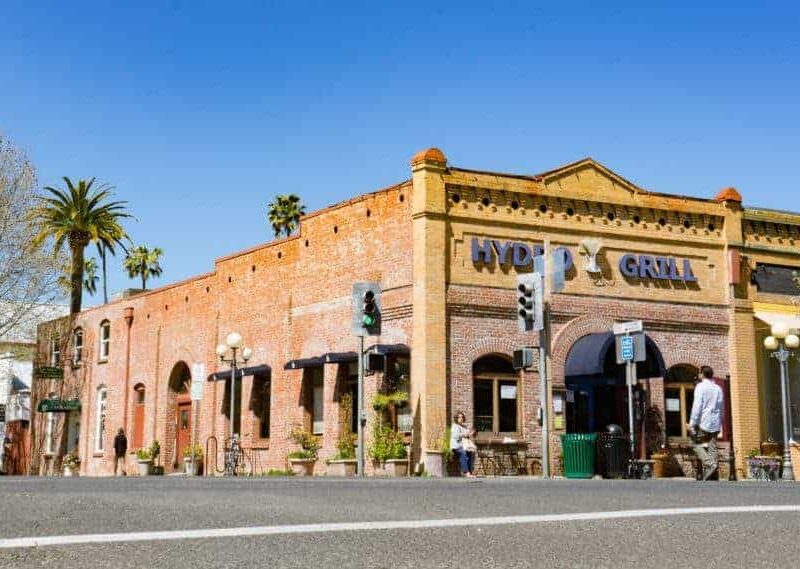
When Gordon Huether moved back to Napa from San Francisco as a young adult, he returned to find that forty-five historic buildings downtown had been demolished, a shift that profoundly shaped his awareness of the built environment. Over the years, as he traveled the country designing large-scale public art installations, he developed strong opinions about urban landscapes and architecture. “Architecture, like music, art and literature, defines our time,” Gordon once wrote. The experience deepened his commitment to creating work that would endure in the public landscape.
That contribution would take the form of art. After falling in love with stained glass making as a teenager, Gordon decided he wanted to spend his career making large-scale works that leave a lasting, positive impact on people.
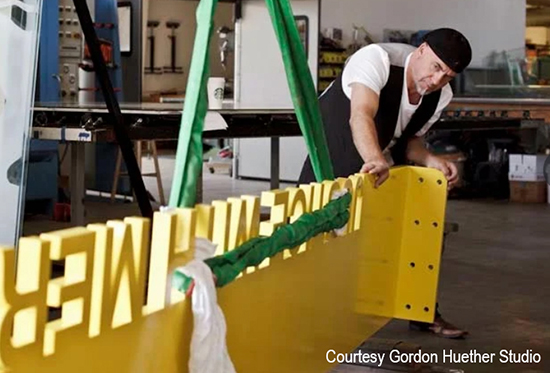
Over the course of his career, Gordon has completed more than 70 public art commissions and 175 private commissions. Working in glass, steel, aluminum, light, and salvaged materials, he synthesizes a site’s history, culture, and geography into sculptural works that reflect the spirit of a place. The studio itself has been an economic engine as well as a creative one. At its peak, Gordon employed forty-five people, managing design, fabrication, and installation for complex projects nationwide.
Although Gordon has worked on projects across the country, his ability to translate Napa’s history and identity into form has left a lasting mark on the city—including the Historic Napa Mill Gateway, crafted from historic and recycled steel, and The Basket outside the Archer Hotel, which honors Indigenous artisans and reflects the interwoven experiences of Napa’s community. Upcoming local commissions include the First Street Hotel and Hotel Oxbow.
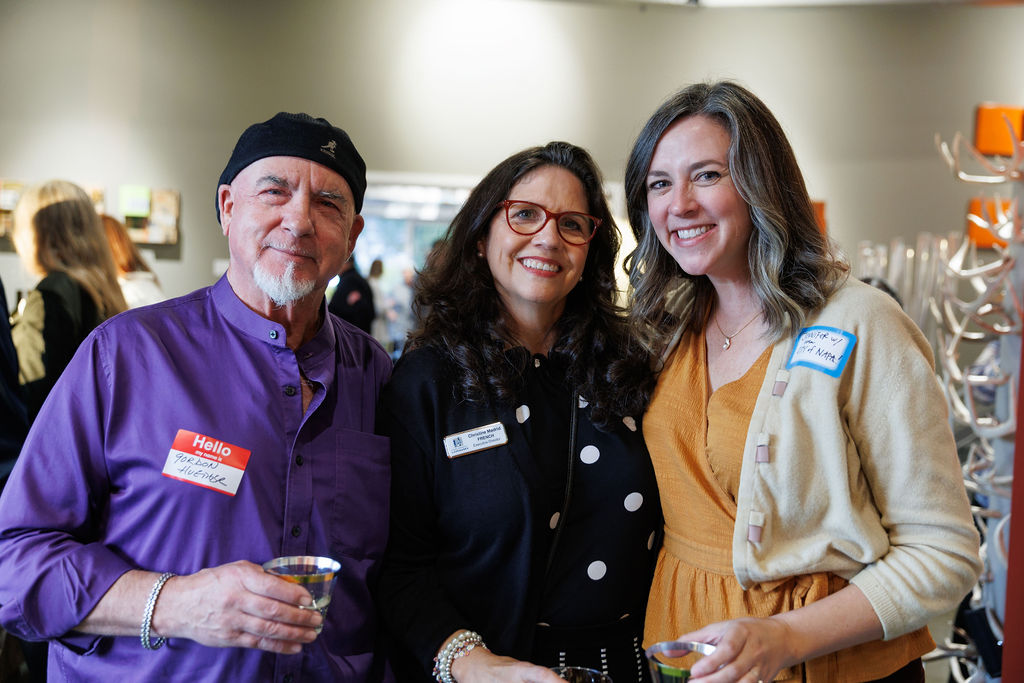
Gordon’s passion for quality design extended beyond his art practice into civic service, including two decades on the Planning Commission. Yet it is his studio—the daily work of making, designing, and building—that represents the true continuity of his legacy in Napa, a creative enterprise that has shaped the city’s visual identity for decades.
Story and photos by Priscillia de Muizon, Inkwell Story Studio.