Historic Little Italy
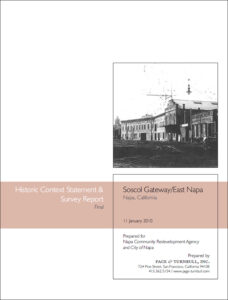
Read the Soscol Gateway, East Napa Historic District statement and survey at Heritage Napa (separated into 21 parts), managed by the City of Napa. Or download and read the whole study here (PDF download, 43 mb).
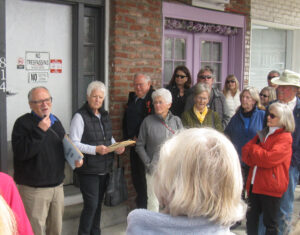
Historic Little Italy
East Napa’s Little Italy grew from the late nineteenth century through the early twentieth century as Italian immigrants settled near the railroad, riverfront industries, and jobs in manufacturing, agriculture, construction, and wine production. The neighborhood became a close-knit community of modest working-class homes, family gardens, hotels, groceries, saloons, and other gathering places.
By the early twentieth century, Italian families made up a substantial portion of East Napa’s population. The neighborhood’s homes and businesses reflect the lives of the people who helped build Napa’s economy and community during this period. Much of that historic fabric remains today, making Little Italy an important physical link to Napa’s immigrant and working-class history.
The 2010 Historic Survey
In 2010, the City of Napa and Napa Community Redevelopment Agency commissioned the Soscol Gateway/East Napa Historic Context Statement & Survey Report. Prepared by Page & Turnbull, the study examined the history and development of the area and documented its historic buildings, neighborhoods, industries, transportation networks, and cultural communities.
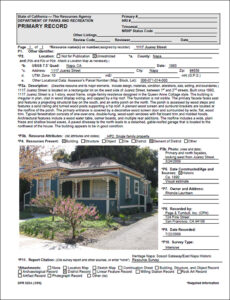
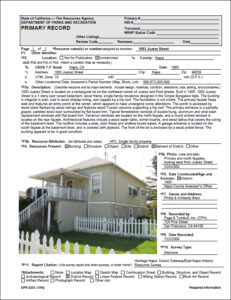
The study recognized the Italian-American community as an important part of East Napa’s history and identified surviving places that help tell that story. A historic survey does not automatically designate every older building or prevent future change. Instead, it provides a framework for understanding what is historically significant and helps guide the evaluation of historic resources when development, infrastructure, or other changes are proposed.
What Is Protected?
Historic recognition and historic protection are not always the same thing. Properties may be identified as historically significant through surveys, listed on the City of Napa’s Historic Resources Inventory, designated locally, or determined eligible for state or national historic registers. The type of recognition a property has can affect how proposed changes are reviewed.
The East Napa Historic District has been determined eligible for listing in the National Register of Historic Places. Because the current transportation project involves federal funding or approval, federal historic preservation review applies. This does not mean that nothing within the district can change. It means that the effects of the project on historic resources must be identified and considered as part of the planning process.
What’s Happening Now?
The City of Napa is planning improvements to the intersection of Third Street, Silverado Trail, Coombsville Road, East Avenue, and Soscol Avenue. Because the project may affect historic resources within the East Napa Historic District, it has been reviewed under Section 106 of the National Historic Preservation Act, the federal process for considering the effects of federally funded or approved projects on historic properties.
Through that process, potential adverse effects to historic resources have been identified and measures to avoid, minimize, or mitigate those effects are being considered. Napa County Landmarks has participated in this process as a preservation organization, with a focus on ensuring that the history and historic resources of Little Italy are understood and appropriately considered as transportation plans move forward.
We want to ensure that the neighborhood’s historic significance is understood and that future planning protects its character, historic resources, and sense of place. Landmarks is advocating for meaningful preservation measures that would document, interpret, and commemorate the neighborhood’s history. The following commitments were requested by Napa County Landmarks and may be incorporated into the Memorandum of Agreement (MOA), that will be discussed at the Napa City Council meeting on September 15 at 6:30 at Napa City Hall. See the city calendar for more details. The public is welcome to attend and comment.
More details on the Five-Way Intersection Project are available on the City of Napa website.
Preservation Commitments for the East Napa Historic District
As part of the project, several measures are suggested to recognize and preserve the history of the East Napa Historic District and Little Italy.
Historic District Re-evaluation
- After construction is complete, the East Napa Historic District will be re-evaluated to determine whether it continues to qualify for listing on the National Register of Historic Places.
Architectural Significance of 801 Silverado Trail
- Landmarks advocates examination by an engineer to determine the feasibility of moving the structure, as well as other mitigation measures to preserve the history of the building, such as documentation or salvage.
Historic District Identification
- New wayfinding signage can help the public identify the East Napa Historic District and recognize the neighborhood’s historic significance.
Oral History Project
- The City of Napa, working with Napa County Landmarks, should develop a professional oral history documenting the neighborhood through interviews with current and former residents and local historians.
- The completed oral histories could become part of the permanent historical record and be shared with local archives and organizations, such as the Napa County Historical Society.
Public Interpretation
- New interpretive displays can tell the story of the East Napa Historic District, highlighting the people, events, and places that shaped the neighborhood.
- These displays could be installed in publicly accessible locations to help preserve and share the community’s history with future generations.
How We Got Here
Under Section 106 of the National Historic Preservation Act, Caltrans was required to evaluate the project’s effects on historic resources and consult with preservation organizations, local agencies, Native American tribes, and the State Historic Preservation Officer. Napa County Landmarks has participated in this consultation process since September 2025 as a Concurring Party. Although the agencies determined that the project’s impacts on the East Napa Historic District could not be avoided, the consultation resulted in a Memorandum of Agreement (MOA) that establishes a series of preservation measures to document, interpret, and commemorate the neighborhood’s history. The above commitments were requested by Napa County Landmarks and may be incorporated into the MOA to help preserve the legacy of this historic Italian-American neighborhood.
Key Outcomes of the Process
- Historic District Recognized – Caltrans determined that the East Napa Historic District is eligible for the National Register of Historic Places because of its significance as an Italian-American neighborhood and its collection of modest working-class homes.
- Historic Impacts Acknowledged – The project was found to have an adverse effect on the historic district, requiring mitigation under federal preservation law.
- Alternatives Considered – Caltrans evaluated alternatives before concluding that the project’s impacts on the historic district could not be avoided.
- Long-Term Preservation Commitments – The MOA requires documentation, interpretation, annual reporting, and continued consultation throughout the project. It also calls for a post-construction evaluation to determine whether the East Napa Historic District remains eligible for the National Register.